worthwhile links for SAP vs. Oracle

OK, posting about the SAP vs. Oracle software theft battle is easy news after last week’s tour de force on IT and business news sites. Having said that, “SAP blog land” remained fairly quiet – I guess a lot of SAP bloggers who are employed by or closely related to SAP can’t or won’t post about this.

Instead, I decided to post a few links I consider a worthwhile read in the news avalanche that was SAP vs Oracle:

If you need to know more… there is always the whole 43 page document.

SAP chief on hosted apps

John Blau of IDG News Service held a short interview with Vishal Sikka, SAP’s Senior Vice President of Architecture. 2 statements stood out for me:

Asked about the CRM on-demand offering Sikka says:

“What you see in our CRM on-demand offering is a significantly easier product to use through ways such as preconfiguration, fewer functions and taking massive advantage of underlying infrastructure. You’ll see us do things that go far beyond Salesforce.com. You’ll see us starting to work with some of the “cloud” platforms like Amazon and Google. We haven’t yet announced any relationships but you’ll start to see us doing things of this sort.”

It will be interesting to see what the collaboration with cloud platforms will entail.

When asked about the cooperation with Microsoft and Duet in particular, he responded:

“We have different development philosophies. Microsoft is much more volume oriented and more consumer focused. But we have a great relationship with them.”

This statement puzzles me slightly. OK, Microsoft is to a large extend putting software onto people’s desktop and the large majority of them are (end-) consumers, hence a larger installation base. But I can’t understand why the development philosophies are so different. I particularly don’t understand why MS is supposed to be more consumer focused. If I try to interpret this, does it mean -for example- MS puts more focus on UIs because they are more consumer oriented – and SAP less? Aren’t a lot of the great conversations that are happening on SDN and in the SAP Blogsphere trying to do exactly the opposite – making SAP more consumer focused (think of the Wiimote experiment as a lighthearted example)?

Virtual SAP TechEd part 3

After my criticism with regards to changes in the delivery format of recorded SAP TechEd sessions (nb from now on it’s called the Premium Access Zone – PAZ), I thought I had seen the end of it. As SAP’s Amir Bilch and Chip Rodgers pointed out, there are some advantages to the new PAZ format, and whilst I still think that these still do not outweigh the disadvantages, I decided to call it a day.

However there has been an interesting statement by Amir in the TechEd forum on SDN with regards to a remark on the tremendous differences in attendance fees for Bangalore and other SAP TechEds. I bascially accused SAP of heavily subsidising the fees for the conference in India, leaving consultants elsewhere short changed. Let me set the scene:

When I first raised the issue on SDN, Chip responded:

You are correct that SAP TechEd Bangalore is priced lower than the European or US events. However, this is not done as a “giveaway” to Bangalore attendees. Each regional event has different inherint cost structures, local practices, and market expectations for such an event. Our aim is to bring the quality educational and professional networking experience of SAP TechEd to major regional markets and allow as many colleagues as possible to participate at locally appropriate and financially prudent levels of registration fee.

So SAP claims the big difference in fees is down to different cost structures, local practises and market expectations. To some degree, we all have to take SAP’s word for this.

Today I spotted Jai Shankar’s comment on the TechEd forum. He attended Bangalore TechEd and asked about PAZ access. Response was that PAZ access is only granted to attendees of Las Vegas and Amsterdam. But Amir also added:

Well, the cost of attending TechEd in Bangalore was around 10% of the cost in Amsterdam. You should be happy about that…
You can purchase a 12 month subscription to Virtual SAP TechEd ’06 for 400 USD and still come up ahead.

My interpretation of this is:

    1. SAP admits that TechEd Bangalore is offered a lot cheaper to attendees in India, because, as it is put, they “should be happy about” only paying 10% of the fees compared to what is charged elsewhere. This obviously contradicts Chip Rodgers’ response to my earlier post.
    2. Looks like TechEd attendance is a little game of numbers and figures, as by purchasing the subscription, you can still “come up ahead”.
    3. Isn’t the particular poster from Bangalore being told to “put up or shut up” ?

      Seems to me as if SAP’s pricing policy and service offerings for TechEd still are all over the place. Something that should be sorted out before the next TechEd conference season starts.

      Interview with Tom Keune

      Actor Tom Keune, who stars in one of SAP’s new german mid market adverts, agreed to a short interview. Tom and I know each other from voluntary service work we both did in Aachen, Germany a few years ago.

      Tom KeuneMK: Hello Tom. What is it you currently do? What are you working on?

      TK: At the moment I am playing at “Theater Junge Generation”, Dresden (Theatre Young Generation) with a repertoire of 11 productions. Amongst other I starred as Mephistopheles in Goethe’s Faust I and Hämon in Antigone. In autumn 2007 I will change to the Gerhard Hauptmann Theatre, Zittau.

      MK: What did you know about SAP before you started work on their commercial?

      TK: Before the first casting relatively little. I knew it was a software company, that’s all. In my job you do not get in contact with SAP’s products.

      MK: How long did the work take?

      TK: Work on the commercial itself took about 11 hours. But if I add it all up (casting, recall, fitting, learn texts, commuting, etc), it’ll probably be more like 33 hours.

      MK: How difficult is it to make the transition from theatre to something like the SAP commercials, for example? Do you prepare yourself?

      TK: The basic approach is not very different. In most cases, the focus is to make the character believeable. Together with the information of the planned campaign (what kind of customers are to be targeted? etc) an idea has to be developed that leaves a tangible impression within the available 14 seconds. You barely get the chance to present a development. And during the shoot the director, of course, wants to see the character that was casted by him as well as by the client. In this sort of setup, searching the right character usually takes place during casting.
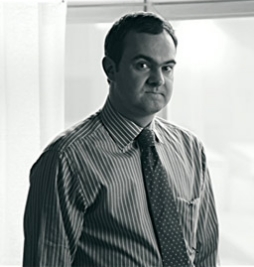
      Tom KeuneFocus of this campaign is to weaken typical prejudices against SAP in a fun and appeasing way. It’s not as if we only shot this one ad for 11 hours: I worked at 3 different sets in 3 different outfits in about 70 variations on this theme. Together with the recordings of my colleagues the best combination had to be found to suit the market, but obviously I wasn’t involved in this anymore.

      MK: What are your future plans? Do you have a “dream role”?

      TK: Planning becomes more and more difficult… first and foremost I want to make good theatre, with a good cast and an audience who enjoys watching it. Unfortunately that’s not always the case.I don’t have a dream role in the classical way. At the moment I am interested in male theatre roles by Horvath and Lorca.

      MK: Tom, thanks for this interview and all the best for the future !

      Berlin notes on Vendorprisey

      Thomas Otter posted some wonderful words about a meeting in Berlin – right at the end of the post he concludes:

      Do please make a point of visiting Berlin, the city has a tremendous buzz and the sense of renewal is infectious. Seeing the holocaust memorial and the remains of the Berlin wall reminded me that there are more important things in the world than enterprise software.

      I last went to Berlin back in 2004 – mainly to see Alemannia Aachen lose to Werder Bremen in the DFB Cup Final. In a weird way I was fortunate enough to see both East and West Berlin back in 1985 on a class trip – I am glad I was given this opportunity, as both journeys had a lasting impression on me. I used to be very critical about the government’s decision to move the german capital from Bonn to Berlin, for example. However the 2004 trip completely changed my thoughts on this matter.